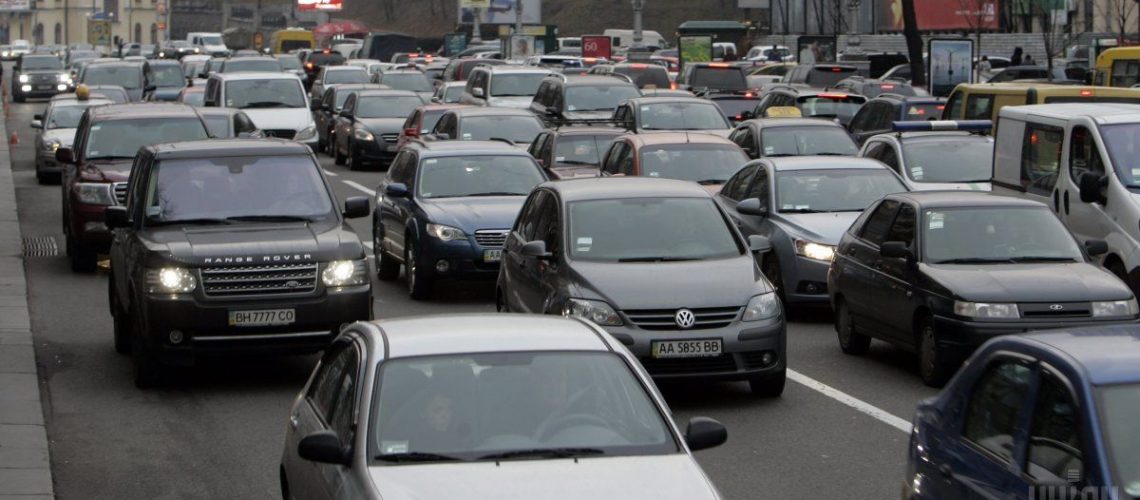
If this rule becomes mandatory for all – the risk of getting into an accident will be reduced by 30%, the risk of riding a pedestrian – by 40%, and the risk of a frontal collision with a by-car when turning to the left – by 60%.
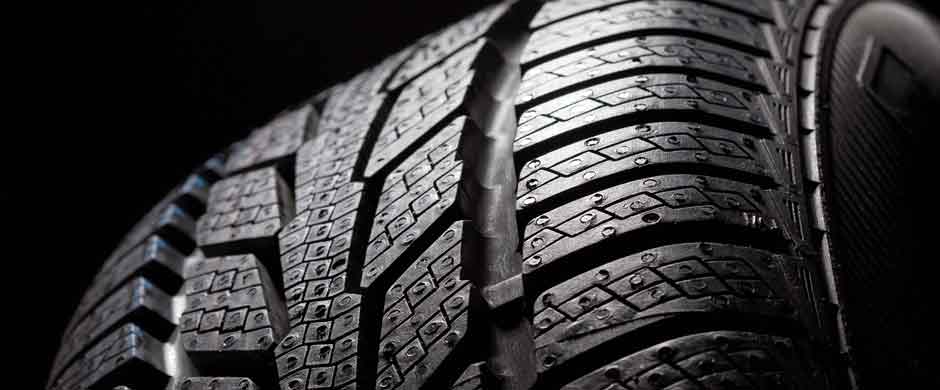
Tires is a shoe for your car should be high-quality, fit in size and fit the season. Do not forget that timely replacement of tires is a matter of your safety, so it’s best not to risk it.
By season
The main natural parameter that tires should be replaced – the average daily temperature. If the temperature in the daytime drops to +7 ° C, cook winter tires.
With the change in air temperature, the characteristics of the tires change and the whole thing in the structure. In the winter autogum there is rubber and resin, and they give it softness and tenacity. Winter tires especially in the heat are very slippery on the pavement and quickly wear out.
What to remember! Replace the tires on quality and good equipment. It is not recommended to replace only the front or rear axle. In case of a sharp deceleration of the car, the greatest load falls on the front axle and if the rubber does not match the season or is over-wearing, it leads to a skidding and an increase in the braking distance. Do not install a tire with a different tread pattern on one axle.
For uniform wear and tear, experts recommend that every 8-10 thousand kilometers be replaced with front and rear axle tires, which significantly helps to extend their lifespan. According to the Ukrainian Railways, the residual tire height of passenger cars is allowed to be 1.6 mm.
What is the correct and well-adjusted light of safety on the road!
World standards in lighting
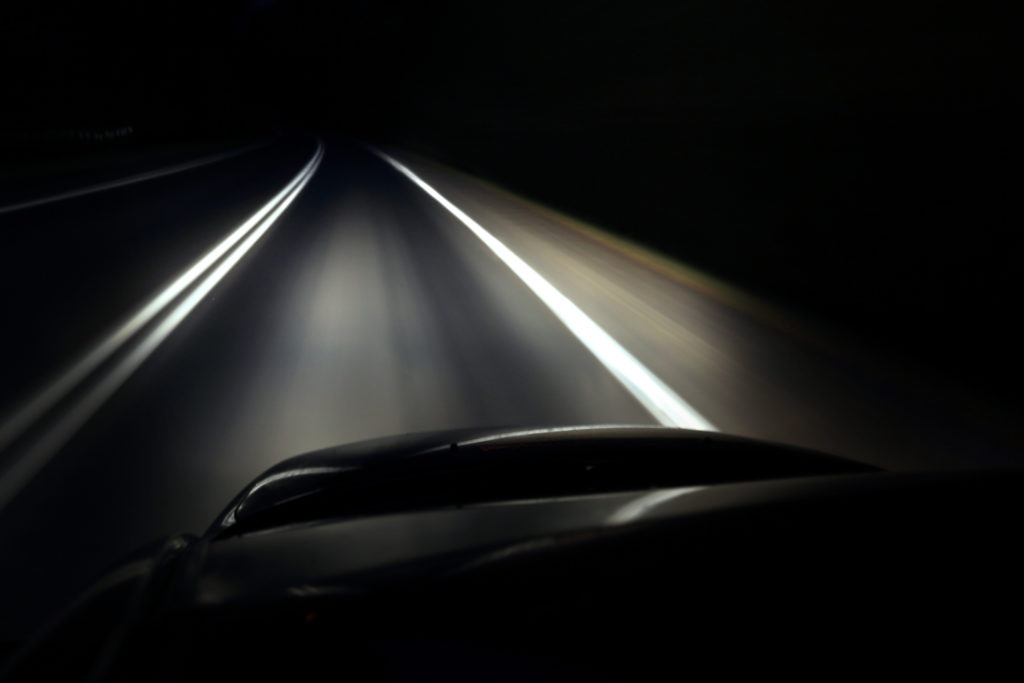
For European cars, since 1957, an infrared light has been set with an asymmetrical light distribution, which means that when driving, the headlamp rises upwards at an angle of 15 °, which provides accented illumination of the right side. In addition, the European standard ECE (Economic Commission of Europe) requires a lower permissible level of blindness for opposing drivers than in the United States.
The American standard “DOT” (Department of Transport) pays great attention to illuminating road signs and markings, so the light of North American headlamps is distributed almost symmetrically as a result of the probability of dazzling higher. Headlamp regulation in the American standard is permissible on the vertical side.
Lighting devices designed for the domestic market of Japanese cars (JDM, Japan Domestic Market) are designed for left-hand traffic, and, in fact, correspond to a mirror copy of ECE.
Types of headlights and what’s their differences
Parabolic – the most common headlights. Their feature is that the lamp is located in the focus (focal point), so that the reflector directs a beam of light along the axis (convenient for high beam). The spreader extends the beam horizontally. A useful light output (“k.p.”) of such headlights – about 27%
FF reflectors – elliptical reflector “free form” (free form, freie flechen). Calculated on a computer, the surface of the reflector is divided into separate segments, each of which is responsible for its part of the illuminated space. The beam is distributed more purposefully and its range increases, and “k.k.d.” reaches about 45%
Projection DE. Headlights with ellipsoidal reflectors or lens optics. The rays of the lamp, located in the first focus, are collected in the second and then fall into the collection lens. The rays, going in the second focus of the reflector, “cut” the screen, which provides the specified light-colored border, and then again focus on the lens. Their k.k.d. already exceeds 50%. Focused bright light lens optics protects the eyes of the oncoming drivers, and does not allow dangerous illumination of the opposite lane.
Advantages of Projection Headlights:
increased light output and best value for money.
improved visibility, increased security and visibility.
modern style.
Disadvantages: fairly high cost.
How is the “lens optics” built in the lens in the headlight – allows you to get a light beam from the smaller surface of the reflector, which surpasses the usual properties. The projection-type headlamp is an optical system consisting of an elliptical type reflector, screen (curtain), and a convex (spherical or elliptical) lens. This design resembles a projector inserted into the headlight and is covered by a transparent glass or diffuser.
Lens devices are more demanding for precision and customization. Even minor deviations are dangerous for oncoming drivers and can significantly degrade your own visibility. If you turn the regular headlight to 4 degrees, the difference will be invisible
History
At the beginning of the XIX century safety belts offered to use the English inventor George Caley he planned to use a strap to hold the pilot of his aircraft. In 1885, the United States issued the first patent for such a device. In 1903, Luis Reno invented a five-point safety belt.
The effectiveness of seat belts
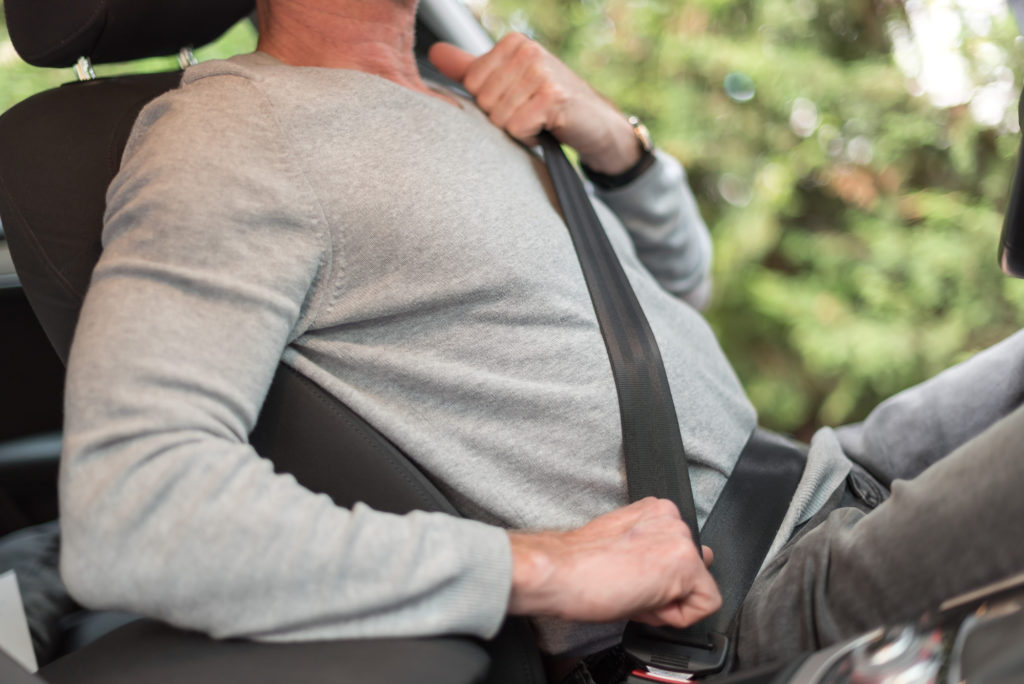
About 70% of the saved lives in critical accidents provide exactly belts (for comparison: airbags – 20%). For the most efficient use, the driver and all passengers need to be fastened – NOT a fastened passenger during a crash at high speed moves through the cabin and his body can cause serious injuries to the driver and other passengers.
The use of a seat belt reduces the risk of driver loss:
in the frontal collision – 2.3 times
at the side – in 1,8 times
rollover – 5 times
When the car is tilted, the belts allow you to avoid impacting the inside of the car, fixing the position of the passengers. The use of seat belts reduces the likelihood of death and serious injuries to passengers:
Front seat – 40-50%.
Rear seat – 25%.
Safety belts myths
The rear seat is safe only if you are fastened. If not fastened, there is a high probability of harming not only ourselves, but also the driver or passenger in the front seat. For example, during an accident at a speed of 50 km / h. The passenger in the rear seat of the average body builds up a weight of 3.5 tons (weight of a large SUV).
Belts do not save at high speed
70% of victims of accidents, not attached to the safety belt, were moving in cars at speeds less than 50 km / h. A collision at a speed of 50 km / h is equivalent to a fall from the fourth floor of the building. At high speed belts reduce the probability of damage by 50%.
The safest place for a driver
Experts from the University of Buffalo USA have analyzed the statistics of the DPT for three years and concluded that the middle rear position would always be at least 16% safer than any other place in the car. It should be understood that if the passenger is not seized at this place, he has a better chance of flying out of the car through the windshield with a frontal collision. Thus, the safest place in a car is where a person is fastened.
Airbags can save you life only if the person is fastened with safety belts. In some vehicles, if the belts are not fastened, the pillows will not work. Airbags provide additional protection against frontal collisions, protecting the head and chest of the driver from the impact on the steering wheel or instrument panel. Airbags are ineffective at the side impact, back or rebound.